





France pushes Lebanon to recognize Israel: Lasting peace or a trap for Jerusalem?
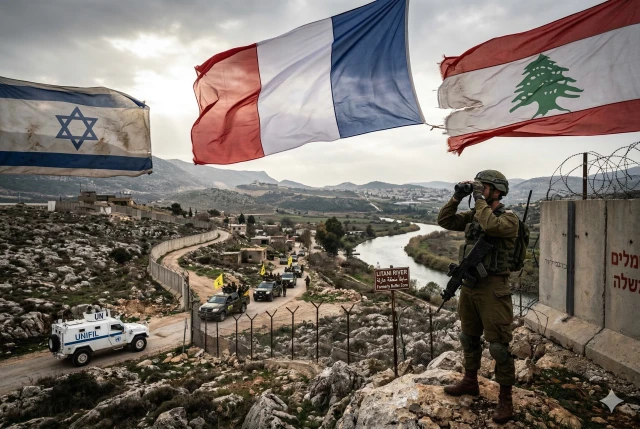
This weekend, the Élysée Palace is attempting an audacious diplomatic gamble: the “French Initiative” for Lebanon. Emmanuel Macron is asking Beirut for the unprecedented: official recognition of the State of Israel, a commitment to no longer tolerate terrorist attacks from its soil, and the disarmament of Hezbollah south of the Litani River. Paris is offering to host "fast-track" negotiations to transform a technical state of war, inherited from the 1948 Arab-Israeli War, when Lebanon joined four other Arab armies to invade the nascent Jewish State, into a permanent non-aggression pact. Yet, behind the gilded halls of the Parisian salons, the reality on the ground tells a very different story.
The plan calls for the Lebanese Armed Forces (LAF) to take full control of the South Litani region, a buffer zone vital to Israel’s security. UNIFIL (the UN Interim Force in Lebanon) would be tasked with verifying Hezbollah’s disarmament, while Israel would evacuate strategic positions held since the escalation in November 2024.
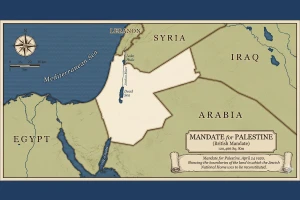
However, history demands skepticism. Lebanon, which was under a French Mandate from 1920 to 1946, has often been a theater of broken international promises. If Beirut retakes this zone, where Hezbollah has been deeply entrenched since 1982, who can truly guarantee that new tunnels won't be dug right under the noses of the UN peacekeepers? Paris supports the Lebanese "Shield of the Nation" plan for a state monopoly on weaponry, but does the Lebanese army have the will, or even the capacity, to confront the Shia militia?
UN Security Council Resolution 1701 (August 2006), adopted to end the Second Lebanon War, already demanded a zone free of any armed personnel other than the Lebanese army and UNIFIL. Israel kept its word, withdrawing in late October 2006. But the record on the Lebanese side is damning:
Hezbollah: Its arsenal has grown 150-fold (estimated at over 150,000 rockets and missiles), transforming Southern Lebanon into an underground fortress.
UNIFIL (13,000 peacekeepers): Present since 1978, it documents violations but remains powerless to intervene under its current rules of engagement. Worse, it is sometimes accused of passive complicity, recalling recent UN investigations regarding UNRWA employees' involvement with Hamas in Gaza.
Entrusting a vital security zone today to an infiltrated Lebanese army and an impotent UN force is a dangerous gamble. The prophet Isaiah (62:6) exhorts the watchers: “I have posted watchmen on your walls, Jerusalem; they will never be silent day or night.” The question for Jerusalem remains: is UNIFIL a watchman, or a mere spectator?
The Macron plan promises mutual recognition and a final border demarcation in 2026. But how can one believe in peace when Paris labels strikes against Iranian infrastructure as "illegal" while offering only lukewarm condemnations of Hezbollah’s daily aggressions?
Jeremiah (6:14) once denounced the false apostles of diplomacy: “They dress the wound of my people as though it were not serious. 'Peace, peace,' they say, when there is no peace.” The risk is seeing the warning of 1 Thessalonians 5:3 fulfilled: “While people are saying, 'Peace and safety,' destruction will come on them suddenly.”
There is a bitter irony in watching France flatter a Lebanese government under Hezbollah’s influence while struggling at home against record-breaking antisemitism (nearly 450,000 French Jews currently live in a state of growing insecurity). Seeking to criminalize destructive anti-Zionism is one thing; indirectly financing or legitimizing the allies of those who preach hatred of Israel in Beirut is quite another. Zechariah (12:3) reminds us that Jerusalem is an “immovable rock for all the nations; all who try to move it will be properly hurt.”
Is this a lasting peace, or a diplomatic framework designed to restrain Jerusalem to the benefit of a weakened but not yet defeated Hezbollah? The evangelical world watches these maneuvers with prophetic vigilance: there is no peace without truth, and no security without clarity.
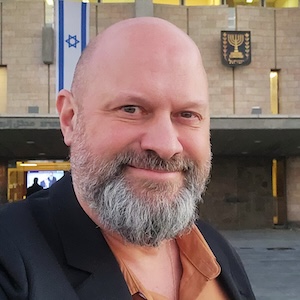
Micaël Carter lives in Israel with his wife and three daughters, having made aliyah from France in 2017. He leads Multiply Equip Impact, serves in ministry and media, and writes on Israel, faith, and the region.
You might also like to read this: