





China, Russia, Turkey call for immediate end of Iran war
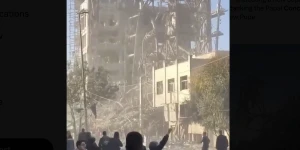
China, Russia and Turkey pushed on Tuesday for an immediate end to the Iran war, which began on Saturday with joint U.S. and Israeli strikes on the Iranian regime and its military assets. The ayatollah regime has responded by firing missiles and drones against Israel, U.S. military bases and multiple countries in the region.
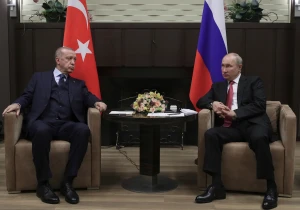
Turkish President Recep Tayyip Erdogan condemned both sides in the ongoing conflict.
“Attacks on Iran, and missile and kamikaze drone attacks [by Iran] on neighboring countries in the Gulf have fueled instability,” the Turkish president argued.
“Through peace-oriented diplomacy, we are making intense efforts to resolve issues at the negotiating table,” he urged.
Turkey, which is a NATO member state, also maintains close diplomatic relations with Tehran.
Turkish Foreign Minister Hakan Fidan reportedly discussed the Iran war with the U.S. ambassador to Turkey and Syria, Tom Barrack. The Turkish foreign ministry also revealed that Fidan spoke with British foreign minister Yvette Cooper concerning “the current security environment in the region” and exchanged views on “diplomatic efforts that could be undertaken to end the hostilities and establish stability.”
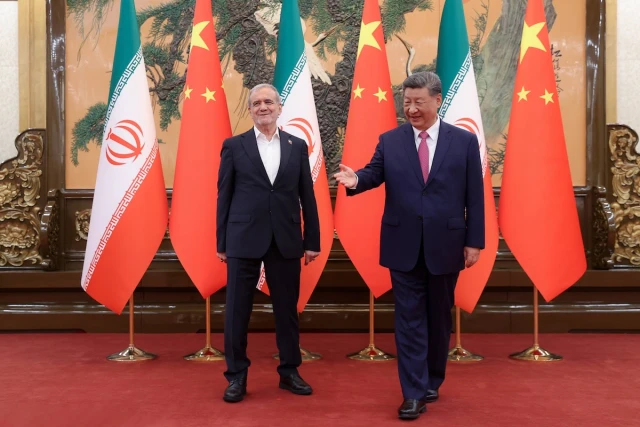
Meanwhile, Chinese Foreign Minister Wang Yi reportedly criticized the American-Israeli military offensive against Iran in a phone call on Tuesday with Israeli Foreign Minister Gideon Sa’ar. China, which has close ties with Iran, demanded a ceasefire and said it backed Tehran “defending its sovereignty.” China's top diplomat also blasted the elimination of Iran’s supreme leader, Ayatollah Ali Khamenei, as a “serious violation.”
The Israeli Air Force eliminated some 40 Iranian top commanders alongside Khamenei during the opening strike on Saturday morning.
Wang reportedly stressed that China backs a solution to the conflict through “dialogue and consultation.”
“Force cannot truly solve problems – instead, it will only bring new problems and severe after-effects,” he argued.
“China calls for an immediate halt to military operations to prevent the conflict from further spreading and getting out of control,” Wang stated.
He also claimed that “the recent Iran-US negotiations were making obvious progress… Regrettably, this process has been interrupted by gunfire.” However, U.S. President Donald Trump’s special envoy, Steve Witkoff, who negotiated with the Iranians, later stated that the talks had reached a dead end due to Tehran’s refusal to give up its nuclear and missile programs, and to end its support for regional terrorist proxies like Hezbollah and the Houthis.
He further revealed that Iranian negotiators had bluntly admitted that Tehran had enriched sufficient uranium for 11 nuclear warheads.
China, which is heavily dependent on oil imports from Iran, is concerned that a prolonged war could disrupt supplies to its economy. In January 2022, Beijing signed a strategic agreement with Tehran pledging to invest some $US400 billion in Iran over the next 25 years.
Russia also blasted the elimination of Khamenei and has called for a ceasefire. Russia’s Foreign Minister Sergei Lavrov reportedly held a phone call with Oman’s Foreign Minister Badr Albusaidi regarding the ongoing war in the Middle East. Oman has previously hosted the negotiations between Iran and the United States.

The All Israel News Staff is a team of journalists in Israel.
You might also like to read this: