





Saudi Arabia warns Tehran against retaliation after downing multiple Iranian drones
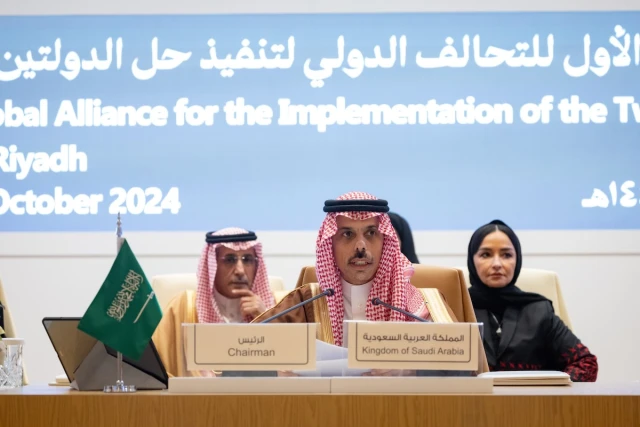
Saudi Arabia reportedly warned Iran on Saturday against further attacks on Saudi soil, unnamed diplomatic sources revealed.
The kingdom, which downed nine Iranian drones, signaled that it prefers a diplomatic solution to the Iranian attacks on its Gulf Arab neighbors following the U.S. and Israeli strikes on Iran that began on Feb. 28. However, Saudi officials warned that the country would respond militarily to continued Iranian attacks, especially if they targeted Saudi Arabia’s critically important energy sector.
In the past week, the ayatollah regime has launched unprovoked missile and drone attacks on Saudi Arabia, as well as Kuwait, the United Arab Emirates, Qatar, Bahrain, Jordan, Turkey and Cyprus.
Saudi Foreign Minister Prince Faisal bin Farhan clarified his country’s position on Thursday in a conversation with his Iranian counterpart, Abbas Araghchi.
Araghchi said Farhan reassured him that Saudi Arabia would not permit U.S. forces to use Saudi soil to launch military strikes on Iran. While Iranian attacks on Israeli and American bases in the region were expected, Iranian forces have also targeted civilian infrastructure in the Arab Gulf states, including hotels and airports.
The Iranian regime appears to be divided between hawks and pragmatists concerning the attacks on the Arab states.
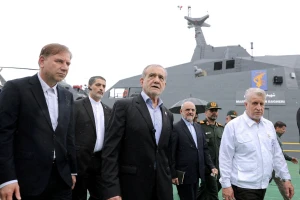
Iranian President Masoud Pezeshkian announced during the weekend that Tehran’s temporary leadership council had decided to suspend attacks on the neighboring Arab countries unless those countries were used for attacks against Iran.
"I must apologize on my own behalf and on behalf of Iran to the neighboring countries that were attacked by Iran," Pezeshkian stated in a speech on public television. “The interim leadership council agreed yesterday that no more attacks will be made on neighboring countries and no missiles will be fired unless an attack on Iran originates from those countries."
U.S. President Donald Trump quickly wrote on social media that the Iranian regime had "apologized and surrendered to its Middle East neighbors, and promised that it will not shoot at them anymore. This promise was only made because of the relentless US and Israeli attack."
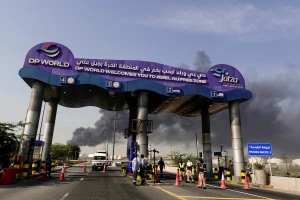
Although the Iranian president issued an apology to neighboring Gulf states in a televised address, Iranian forces continued strikes on Gulf targets, including reported explosions near Dubai International Airport shortly afterward, highlighting divisions within Iran’s leadership.
The attack on the Dubai airport suggests that the Islamic Revolutionary Guard Corps (IRGC) favors continued attacks on Iran’s neighbors despite the Iranian president’s conciliatory tone. Two unnamed Iranian sources confirmed that Saudi Arabia had indeed conveyed a warning to Tehran to halt its attacks on Saudi soil.
Tehran has said it does not intend to target Arab Gulf states and is focused on U.S. interests in the region. However, Iran’s continued strikes on civilian infrastructure in Arab states – including airports, hotels and other facilities – have raised questions about that claim.
Qatar and the United Arab Emirates became the first Arab states to respond to the Iranian attacks with military force, even though they each have only small militaries with limited offensive capabilities. By contrast, Saudi Arabia is widely regarded as the most powerful Arab Gulf state.
The countries in the region are therefore carefully watching what Saudi Arabia intends to do about Iranian attacks on civilians in the Gulf states.

The All Israel News Staff is a team of journalists in Israel.
You might also like to read this: