





A Muslim NATO? Turkey seeks to join Saudi-Pakistani mutual defense pact in bid to reshape region
Possible entrance of Turkey into defense pact raises spectre of nuclear-enabled Turkey
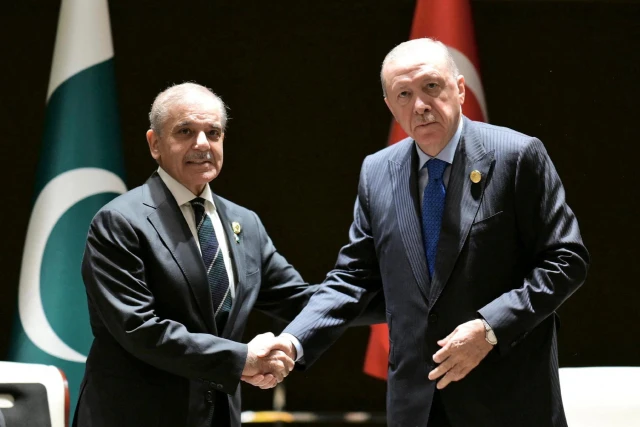
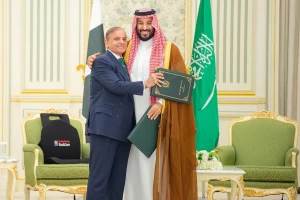
Turkey is seeking to join a defense alliance between Pakistan and the Kingdom of Saudi Arabia, in a move that could create a new regional defense pact similar to the North Atlantic Treaty Organization (NATO), Bloomberg reported on Friday.
The current defense agreement between Pakistan and Saudi Arabia contains a clause that stipulates that “any aggression” against one state is considered an attack on all members. This clause is similar to Article 5 of the NATO treaty, which was set up to block Soviet advancement and offer a mutual defense pact for the weaker European nations, together with the United States, following World War II.
Turkey joined NATO in 1952 and today fields the alliance's second-largest army, after the U.S.
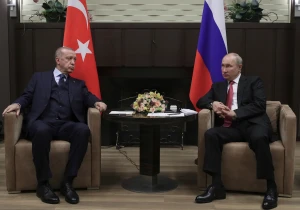
According to Bloomberg, talks for Turkish entry into the Saudi-Pakistan agreement are already in an advanced stage, and a deal looks likely. The move by Turkey accords with previous statements by Turkish leaders, such as President Recep Tayyip Erdoğan, who has called for an Islamic alliance against Israeli “aggression.”
At the same time, Erdoğan has been moving away from U.S. and NATO positions in the Middle East in recent years, attempting to minimize his country’s dependence on the West, with whom he often has ideological and strategic differences. This position was emphasized by Nihat Ali Özcan, a strategist with Ankara-based think tank TEPAV, who spoke with Bloomberg.
“As the US prioritizes its own interests and that of Israel in the region, changing dynamics and fallout from regional conflicts are prompting countries to develop new mechanisms to identify friends and foes,” Özcan said.
Turkey has already begun to make inroads into Pakistan’s economy and security sectors, signing a $US300 million hydrocarbon exploration agreement with Pakistan last year, and increasing cooperation in defense production, drone development, naval modernization, and intelligence coordination over the past couple of decades.
These actions are consistent with other moves by Turkey to expand its political and military influence in the Sunni Muslim world, as part of Erdoğan’s goal of reviving Turkey’s Ottoman-era region of influence, if not increasing the size of its borders.
Özcan said that the partnership of the three nations would bring several strengths to the alliance: Turkey would bring significant military experience, along with a growing defense industry, Saudi Arabia would bring economic power, while Pakistan would bring a nuclear umbrella, a developed ballistic missiles program, and significant manpower.
Turkey has already been manufacturing some of Pakistan’s naval vessels, and its drone program is one of the most advanced in the world. At the same time, according to the Turkish news site Daily Sabah, Turkey could seek to establish drone production facilities in Pakistan, for use by the Pakistani military. The country has also attempted to convince Pakistan to join the development of its next-generation KAAN fighter jet program.
A mutual defense alliance could see each of the countries investing in and buying from each other’s defense industries. While Turkey and Saudi Arabia have frequently been rivals for influence among the Sunni Muslim world, Saudi Arabia has taken a step back from its attempt to join the United Arab Emirates as a moderate Muslim nation, especially as it increasingly finds itself in tension with the UAE. The Kingdom also has a history of a highly critical stance towards Israel, despite attempts by both the first administration of Donald Trump and former President Joe Biden to bring about normalization between the countries.
Saudi Crown Prince MBS:
— Eyal Yakoby (@EYakoby) June 12, 2025
"The Ayatollah wants to create a project in the Middle East like Hitler. Many countries didn't realize how dangerous Hitler was until it was too late. Saudi Arabia does not want nuclear bombs. But, if Iran developed a nuclear bomb, we will follow suit." pic.twitter.com/bARLYuMdUj
However, some analysts who have been watching Turkey over the years fear that entrance into a mutual defense pact would also enable another goal of Erdoğan: achieving nuclear weapons for the Turkish military. If true, it is possible that Saudi Arabia, which has sought to gain U.S. support for a civilian nuclear energy program while stating its willingness to gain nuclear weapons, could also seek access to Pakistan’s nuclear weapons program in order to maintain strategic deterrence.
The Israeli government would view either nation achieving nuclear weapons as an existential threat and could take action to thwart such a move, as it has done in Iraq, Syria, and Iran.

The All Israel News Staff is a team of journalists in Israel.
You might also like to read this: