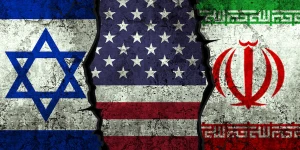






Why is Trump waiting so long to decide on an Iranian strike?
An analysis of the tactical and strategic concerns involved in military action against Iran
The U.S. military buildup in the Middle East indicates a potential military operation against the Islamic Republic of Iran is more a matter of if and not when. However, U.S. military planners are weighing key challenges and concerns as they brief U.S. President Donald Trump on the various options. A central component is determining the goal of such action, which affects the target and scope.
What is the goal of military action?
Perhaps the first challenge concerns both the nature and scope of U.S. military action in Iran. In other words, what exactly is President Trump hoping to accomplish with military strikes? The plausible target bank for an initial round of strikes depends on the answer to this question.
Regime change
Initial strikes will likely target Islamic Revolutionary Guards Corps (IRGC) and Basij facilities, along with Supreme Leader Ayatollah Ali Khamenei, and those in his immediate circle.
Additional targets include key defensive and offensive capabilities capable of targeting U.S. bases and strategic allies, moving quickly to suppress possible retaliation attempts by the IRGC or the Iranian military. Such a move could involve limited special operations activity, although the U.S. does not want a repeat of Operation Eagle Claw [the failed 1980 mission to rescue the U.S. Embassy staff in Tehran.]
Elimination of the nuclear threat
This scenario would likely involve targeted attacks against enrichment facilities, centrifuge production sites, research sites, and possibly targeting Iranian nuclear scientists, as Israel did at the start of Operation Rising Lion. Bunker-buster bombs and other heavy payload munitions would target facilities Iran has been working diligently to reinforce and protect against exactly this scenario.
Convince the regime to make a deal
This scenario would see a limited strike intended to convince the Islamic Republic of the seriousness of the U.S. in achieving a negotiated settlement of several issues beyond nuclear weapons, and the willingness of the United States to use force to achieve this objective. This appears to align with President Trump’s preference for quick, decisive action, which achieves significant goals while not turning into a long-term campaign.
This scenario could see Ayatollah Khamenei targeted, along with prominent nuclear and military facilities, with the intention of demonstrating the capability to harm.
While risky, this scenario aims to demonstrate the capability to carry out a much more intense and destructive operation and to convince the regime to return to the negotiating table.
While this option suits Western sensibilities, it is not likely to produce the desired result. As Secretary of State Marco Rubio said recently, the Islamic regime in Tehran is making primarily theological decisions in this standoff, not geopolitical ones.
The regime is already feeling backed into a corner with the imposition of sanctions, the foreign support for the previous month’s protests, and because of its Twelver Shi’a outlook on politics, whether geo- or local, and its apocalyptic eschatology.
A “limited” strike would likely be received by the regime the same as any other strike, provoking a sharp response.
In fact, the regime has threatened to target U.S. military assets across the Middle East, if targeted by the U.S. or an Israeli strike.
Regardless of the goal, initial U.S. strikes must be overwhelming in the first 24-48 hours, aimed at devastating Iran’s military infrastructure, and mimicking Israel’s Operation Rising Lion by targeting military and political leadership simultaneously, followed by military infrastructure.
The least likely option, in my opinion, is a set of broad strikes, targeting Iran’s energy sector in the Persian Gulf, along with a potential blockade of the Strait of Hormuz. Such a move is practically guaranteed to ignite a long-term conflict with global effects.
The tactical challenges of striking Iran
Strikes on Iran would likely launch from U.S. forces west of Iran (Persian Gulf, Mediterranean, Turkey/Iraq bases), as Gulf allies restrict offensive use of their facilities.
Iran’s vast southwestern coastal border, over 1,300 km (850 miles), hosts naval stations and missile garrisons, which risk saturation attacks – overwhelming defenses by volume (number saturation) or speed (time saturation) – on U.S. forces nearby.
Over 1,200 kilometers (over 700 miles) of rugged mountainous terrain form the western land borders with Iraq and Turkey, representing another challenge. Israel destroyed much of Iran’s air defense capabilities in this region in October 2024 and during the June 2025 Operation Rising Lion. However, Iran has been working to rehabilitate these capabilities since then.
The Islamic Republic’s ballistic missiles, many of them hidden within underground bases in mountainous terrain, pose a more difficult challenge. During Operation Rising Lion, Iran shifted to nighttime launches to minimize visibility of launch positions and to its arsenal of solid-fuel rockets, which require less preparation time before launch. This means a shorter window of opportunity to be targeted by U.S./Israeli fighter jets.
Israeli intelligence indicates that Iran is attempting to build sufficient medium- and long-range ballistic missiles in order to saturate Israel’s air defenses. Iran is trying to boost production from around 50 ballistic missiles per month before the 12-day war to 300 missiles per month following the war. It hopes to launch around 2,000 ballistic missiles at Israel, saturating Israel’s air defenses in both senses.
Iran is limited in its launch capabilities primarily by the number of launchers, not the number of missiles. Thus, any U.S. and/or Israeli strike will also need to maintain a significant continuous fighter jet presence in order to identify and destroy launchers as they are used.
Iran’s response
Unable to match the U.S. in a conventional war, Iran is likely to respond asymmetrically: using ballistic missiles, drones, rockets, and short-range missiles to target U.S. assets in the region, while potentially closing the Strait of Hormuz.
The Islamic Republic is likely to pressure its proxies, Hezbollah, the Houthis, as well as Shi’a militias in Iraq, to act to destabilize the region. The Houthis successfully disrupted sea traffic through one of the world’s busiest shipping lanes during the Gaza War, causing much shipping traffic to reroute around the continent of Africa.
Such action, combined with a blockade of the Strait of Hormuz, would have global effects.
The Islamic Republic will not likely be able to maintain even an asymmetrical front for too long against U.S. and potentially Israeli strikes. However, the U.S. cannot afford to maintain its force buildup in the area indefinitely. President Trump will soon have to decide whether to use that force or send it to other arenas.
The Iranian leadership knows this, as does Trump. The president has repeatedly stated his preference for a negotiated agreement, along U.S. lines. The next few days should prove whether Iran is willing to make such an agreement.

J. Micah Hancock is a current Master’s student at the Hebrew University, pursuing a degree in Jewish History. Previously, he studied Biblical studies and journalism in his B.A. in the United States. He joined All Israel News as a reporter in 2022, and currently lives near Jerusalem with his wife and children.