





Iran and Jordan – Comparative symbolic representations during times of unrest

It is often said that the raison d’être of autocratic regimes is power; of democracies, social justice; and of monarchies, prestige and symbolic authority. When the foundational pillar sustaining any political system begins to erode, the regime itself enters a period of existential vulnerability. This observation, I would argue, applies equally to theocratic systems.
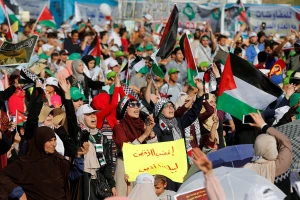
One of the most striking features of the ongoing protests that have erupted in Iran has been the deliberate targeting of regime symbols. Demonstrators defaced portraits of senior clerics, attacked mosques, and even desecrated the national flag. Whether such actions were spontaneous or strategically coordinated lies beyond the scope of this article. What is nevertheless evident is that, drawing on the memory of earlier failed uprisings, protesters appeared to intuitively grasp a central vulnerability of the Islamic Republic: much like the overthrown Pahlavi monarchy, the current regime relies heavily on symbolic representation to reproduce its authority within the social order.
In both monarchies and theocracies, it is orthopraxy rather than orthodoxy – pragmatic performance rather than ideological purity – that ultimately underpins regime survival in moments of mass challenge. When confronted with public anger, these systems often prioritize symbolic gestures over doctrinal consistency. Consequently, acts perceived as hubris or excess on the part of security forces tend to provoke a symbolic counter-response from protesters, who deliberately target the very national and religious emblems through which the regime seeks to project legitimacy.
Iran’s theocratic experience invites comparison with how a monarchical system manages dissent – most notably, the case of Jordan. As a centennial monarchy, Jordan has cultivated a distinctive repertoire of symbolic politics during periods of unrest. Under the late King Hussein (1935-1999), the monarchy frequently relied on the king’s personal charisma and his ties with East Bank tribal constituencies – then the backbone of the regime – to defuse politically or economically driven crises. Yet in relatively stable monarchies, symbolic representation is not merely a top-down instrument deployed by the ruler; it can also function laterally and even from below, including through the behavior of state agents tasked with managing protest.
A revealing example – frequently cited in the scholarly literature and exceptional in the Middle Eastern context – occurred in January 1997. At that time, a diverse group of Jordanians gathered outside Amman to protest the opening of the first Israeli trade fair held in Jordan, an initiative linked to the economic normalization provisions of the 1994 Israel-Jordan peace treaty. Anticipating large demonstrations, the authorities deployed army units and riot police to secure the event.
While the protest remained largely nonviolent, it produced an unexpected symbolic interaction. According to contemporaneous academic accounts, riot police at one point began chanting and performing impromptu traditional tribal songs. This action was not an attempt at levity or crowd appeasement. Rather, it emerged in response to protesters’ accusations that the security forces – and by extension the state – were demonstrating greater loyalty to Israel than to Jordan itself. By invoking tribal musical traditions closely associated with East Bank identity and Hashemite statehood, the riot police were symbolically asserting their own “authentic” Jordanian-ness.
Far from defusing tensions, this performative act exposed the deeper fault lines within Jordanian national identity – particularly the long-standing divide between citizens of East Bank origin and those of Palestinian descent. The episode illustrates how symbolic performance can serve as a contested political language through which state agents and protesters alike negotiate belonging, loyalty, and legitimacy. In this sense, the riot police were not merely enforcing order but actively participating in a symbolic struggle over the meaning of the nation itself.
Both Iran and Jordan, therefore, exemplify regimes – one theocratic, the other monarchical – that rely heavily on symbols and prestige to generate consent and social control. Yet their trajectories diverge sharply. The Iranian regime has thus far struggled to recalibrate its symbolic and policy toolkit in response to persistent demands for substantive reform. Jordan, by contrast, has demonstrated – however imperfectly – that symbolic representation, when deployed in nonviolent and culturally resonant ways, can sometimes substitute for coercion and help preserve regime stability.
Symbolic politics, in short, remain a double-edged instrument: capable of reinforcing authority, but also of revealing the very fractures that threaten it.
This article originally appeared on ALL ARAB NEWS and is reposted with permission.
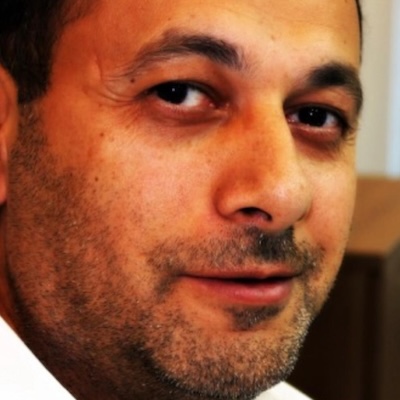
Philip Madanat (PhD) is a Jordanian researcher and analyst with an academic background spanning Israel, Jordan, Japan, and Spain. He earned his Ph.D. from Universitat Oberta de Catalunya, where his doctoral research focused on the influence of Friday sermons in shaping public opinion in Jordan. His work has provided deep insights into Islamic movements in Jordan and Syria and has informed efforts to facilitate the release of Christian hostages from Syria and Europe. Philip has published on media accountability in peer-reviewed journals and contributed to international studies on media, migration, and conflict. He has been commissioned by both Arab and European intelligence agencies to conduct research on security dynamics in volatile regions of the Levant. Philip fluently speaks Arabic, English, and Spanish.
You might also like to read this: