





Amid tight cooperation between US and Israel on Iran war, Trump says decision to end hostilities will be ‘mutual’
White House reportedly concerned about IDF strike on Tehran fuel depots as energy prices spike
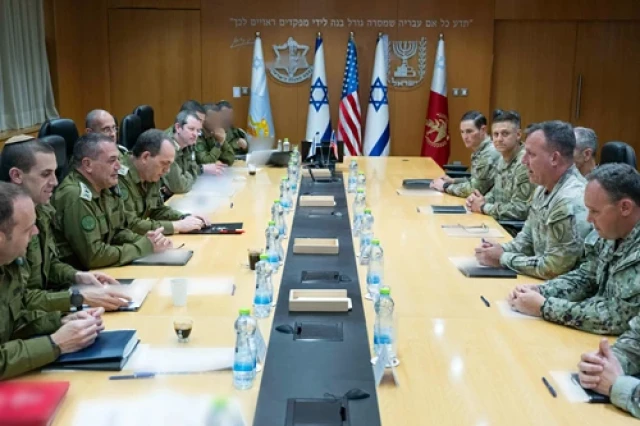
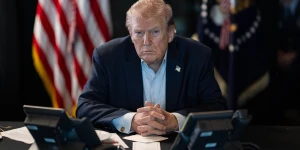
U.S. President Donald Trump said a decision to end the war in Iran would be “mutual” between the United States and Israel, amid reports that the U.S. was miffed about the extent of Israel's first strikes on Iranian oil depots last weekend.
In a phone interview with the Times of Israel on Sunday, Trump was asked whether the decision to end the war with Iran would be made independently or discussed with Prime Minister Benjamin Netanyahu.
“I think it’s mutual… a little bit. We’ve been talking. I’ll make a decision at the right time, but everything’s going to be taken into account,” the president responded.
When asked whether Israel would be able to continue the war against Iran even if the U.S. decides to halt operations, Trump said, “I don’t think it’s going to be necessary.”
The war in Iran began with joint U.S. and Israeli strikes following weeks of attempted negotiations between Washington and Tehran over Iran’s nuclear program. Last year, during Israel’s Operation Rising Lion, the U.S. only joined the military operations after Israel had begun targeting Iran’s nuclear and military facilities for over 10 days.
Trump also said the Islamic Republic was trying to destroy Israel and the Middle East. “Iran was going to destroy Israel and everything else around it,” Trump told the Times of Israel. “We’ve worked together. We’ve destroyed a country that wanted to destroy Israel.”
While President Trump has not publicly committed to a firm timeline for the war, he previously stated that the military operations could last four weeks or longer. This was confirmed by White House Press Secretary Karoline Leavitt on Friday, who said that the administration expects the military campaign to last four to six weeks.
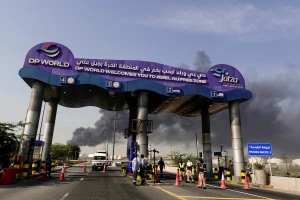
The war, which began Feb. 28, has led to significant disruption in oil supplies, causing oil and gasoline prices to rise around the world. Over the weekend, Israel attacked Iranian energy infrastructure, blackening skies over Tehran by striking oil depots for the first time.
The strike on the fuel depots caught the White House off guard, with officials saying the administration is concerned that such attacks could boost support for the regime, according to an Axios report.
"We don't think it was a good idea," a senior U.S. official told the outlet, which also cited a Trump advisor saying, "The president doesn't like the attack. He wants to save the oil. He doesn't want to burn it. And it reminds people of higher gas prices.”
The Israeli strike even drew a rare rebuke from Senator Lindsey Graham, a close friend of Israel.
He wrote on 𝕏: "There will be a day soon that the Iranian people will be in charge of their own fate, not the murderous ayatollah’s regime. In that regard, please be cautious about what targets you select. Our goal is to liberate the Iranian people in a fashion that does not cripple their chance to start a new and better life when this regime collapses. The oil economy of Iran will be essential to that endeavor."
Iranian strikes on Gulf states have targeted oil and natural gas sites in Saudi Arabia, the United Arab Emirates, and Qatar, causing temporary shutdowns of some facilities. Along with the effective closure of the Strait of Hormuz due to the risks of navigating the waterway during the conflict, the global oil supply has been disrupted, sending many markets tumbling.
President Trump indicated that the spike in oil prices is only temporary and that prices will stabilize after the war is over.
“Short term oil prices, which will drop rapidly when the destruction of the Iran nuclear threat is over, is a very small price to pay for U.S.A., and World, Safety and Peace. ONLY FOOLS WOULD THINK DIFFERENTLY!” Trump wrote in a post on Truth Social.
Trump’s comments were echoed by Department of Energy Secretary Chris Wright on Sunday, who said that the rise in energy prices will likely only last weeks, not months.
Referring to U.S. gasoline prices, which have declined since President Trump returned to the White House, Wright said, “We want it back below $3 a gallon. And it will be again before too long.”
“You never know exactly the time frame of this, but, in the worst case, this is a 'weeks' – this is not a 'months' thing,” he said, referring to the spike in prices.
“The U.S. is targeting zero energy infrastructure,” Secretary Wright stated.

The All Israel News Staff is a team of journalists in Israel.
You might also like to read this: