





Esther: a biblical story of rescue and redemption
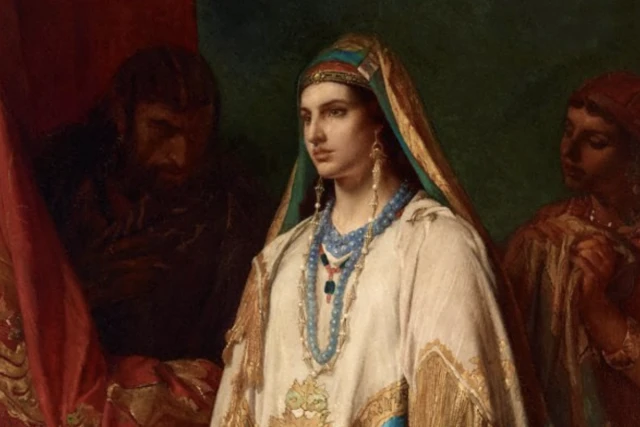
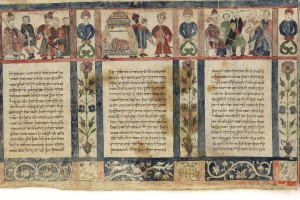
The whole scroll of Esther is read from start to finish in Jewish communities all over the world for the Feast of Purim, typically while wearing ridiculous costumes. Purim is a fun and light-hearted feast, but there are depths to the story that should not be lost on us today.
There’s a Yiddish expression that comes from this tradition of reading all 10 chapters in one go: “The whole megilah” which literally means “the whole scroll.” It's used to refer to the full, unedited version of something, with all its complications and convolutions. And it’s true that the story of Esther does have its complications with twists and turns, but that only makes it more of a delight to read each year: you’ll never get tired of it or fail to find new nuggets.
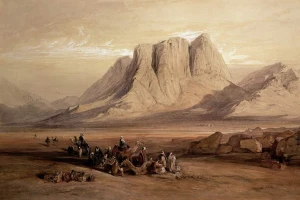
This year, since we have just been reading about the details of the tabernacle in the weekly Torah portions, I noticed a couple of new details in the story that echoed back to the holy of holies. There’s lots of gold, ornate tapestries and expensive vessels in both descriptions of the palace in the Persian capital and in the instructions given on Mount Sinai.
Gold reflects God’s holiness, purity, and divinity whereas silver relates to redemption (consider the silver shekels given in exchange for Joseph, and later for Jesus, and the silver temple tax for each Israelite). There are rings of silver mentioned in the first chapter of Esther (whereas they are gold in Exodus) which hints at redemption from the get-go.
When Hamas approaches the king – asking to destroy the Jewish people – he offers silver, almost like a bribe, to let him carry out his wicked schemes: “If it please the king, let it be decreed that they be destroyed, and I will pay 10,000 talents of silver into the hands of those who have charge of the king's business, that they may put it into the king's treasuries,” he slyly submits.
However, unlike Judas, the king does not take the silver and, as the story later makes clear, ultimately permits the Jews to defend themselves against Haman’s evil edict. Rescue and redemption.
When the Jewish people are granted permission by royal decree to defend themselves, they are also authorized to take plunder from their enemies, but chapter 9 tells us three times that they do not. Against the libelous stereotype of “greedy Jews,” there is no money grabbing at all. Quite the opposite: Purim becomes a holiday of giving and generosity.
“Now the rest of the Jews who were in the king's provinces also gathered to defend their lives, and got relief from their enemies and killed 75,000 of those who hated them, but they laid no hands on the plunder. This was on the thirteenth day of the month of Adar, and on the fourteenth day they rested and made that a day of feasting and gladness. But the Jews who were in Susa gathered on the thirteenth day and on the fourteenth, and rested on the fifteenth day, making that a day of feasting and gladness. Therefore, the Jews of the villages who live in the rural towns, hold the fourteenth day of the month of Adar as a day for gladness and feasting, as a holiday, and as a day on which they send gifts of food to one another.” (Esther 9:16-19)
Today is the 15th of Adar in the Jewish calendar, the second day of Purim known as “Shushan Purim” based on this passage in which the city of Susa (Hebrew for Shushan) went on for an extra day. However, this only applies to Jerusalem, since Susa was a walled city and the capital of the Persian Empire, as Jerusalem is to Israel today.
Even though the story of Esther, when read in one sitting, feels like it all happened over a few days, the events from start to finish cover years. From the moment Haman began cooking up his schemes to the redemption and deliverance of the Jews was a full year, pretty much. But noting the dates in the Jewish calendar also points us to the profound redemptive echoes throughout the narrative.
Esther called for the fast over three days: Nisan 13, 14 and 15. The evening of the second day is the Jewish feast of Passover, when God redeemed His people from death in Egypt and set them free. These dates were also the appointed time when Jesus died on the cross, defeated death and rose again, turning everything upside down – or rather, the right way up. This was the great redemptive work of the promised Messiah: dealing with our death sentence, and bringing resurrection life instead.
In the story of Esther, God heard the prayers of His people over those three days of fasting, and the redemption was set in motion with the ,extension of the king’s golden scepter, a symbol of the divinity and authority of the Messiah from the tribe of Judah (see Genesis 49:10). It would take time for that redemption to be fully worked out but a profound turnaround had begun.
I shall ransom them from the power of Sheol;
I shall redeem them from Death.
O Death, where are your plagues?
O Sheol, where is your sting? (Hosea 13:14a)
Back in the time of the Exodus, a mixed multitude of Egyptians left with the people of Israel, joining God’s covenant community. Likewise, in Esther, many Persians aligned themselves with the Jews and became part of the house of Israel.
Now we seem to be living in some sort of re-run of the Purim story, as the determined plans of the Islamic Republic to destroy Israel are being thwarted and turned back on their heads.
This time, deliverance and redemption are also on their way for the people of Persia who have been held hostage by their own version of evil Haman. With the fastest growing church of the world, I wouldn’t be surprised to see millions of Iranians streaming to worship the God of Israel together with us at the end of all this.
Perhaps they can come and celebrate Purim with us ... next year in Jerusalem.

Jo Elizabeth has a great interest in politics and cultural developments, studying Social Policy for her first degree and gaining a Masters in Jewish Philosophy from Haifa University, but she loves to write about the Bible and its primary subject, the God of Israel. As a writer, Jo spends her time between the UK and Jerusalem, Israel.
You might also like to read this: