





Is the Book of Esther a true story?
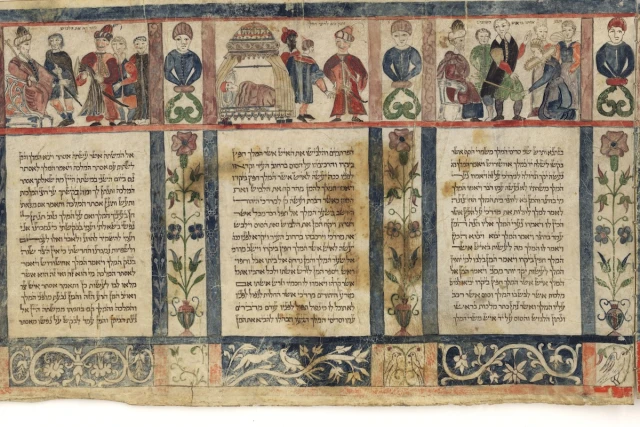
While the Book of Esther contains some interesting details that set it apart from the rest of the Bible, a growing body of empirical evidence suggests that the events described really did happen.
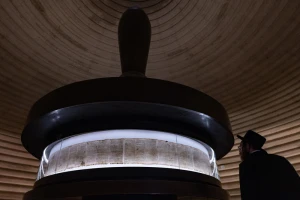
Esther is the only book in the Hebrew scriptures that was not found among the Dead Sea Scrolls. The reason for the omission has puzzled people for decades.
The elaborate descriptions of the palace in the opening chapters sound almost like a fairytale, and the book does not explicitly mention God even once, though He is present in the background. He is the one who receives the prayers and prompts the king during the pivotal night that leads to the story’s dramatic reversal.
Archaeological evidence for the mausoleum of Esther and Mordecai in Hamadan, Iran, appears to support the veracity of the events, however, there is no evidence that the tomb existed before the Middle Ages. It is not mentioned in early Jewish literature. However, there is reason to believe that Esther and Mordecai are more than fictional characters.
Iranian academic Morteza Arabzadeh Sarbanani from the University of Tehran published two papers in recent years, arguing that the events described in the biblical story of Esther may have more historical support than previously thought.
In his paper, “The Book of Esther as a Source for Achaemenian History,” published in The Ancient Near East Today, Sarbanani writes, “A significant part of the historical material of the Book of Esther is in line with evidence that most of the classical sources are unaware of. This independence from the Greek sources makes the Book of Esther more important as a historical source for Achaemenian history than has traditionally been assumed.”
In his paper published in the “International Journal of Ancient Iranian Studies,” he provides an example from Esther 1:3 that speaks about the king’s reign from the Persian capital of Susa: “In the third year of his reign, he gave a feast for all his officials and servants. The army of Persia and Media and the nobles and governors of the provinces were before him.”
Sarbanani notes that this event is in line with historical evidence: “A Babylonian document dated to the early 483 BC, the third year of Xerxes’ reign, proves that he was in Susa at that time (Olmstead, 1948: 230-231). This perfectly matches the statement of the Book of Esther from a chronological point of view.”
Jewish people have lived in Iran for over 2,700 years, since they were forcibly exiled by the Babylonians in 586 B.C. Isaac Yomtovian, author of "My Iran: Memories, Mysteries & Myths," recounts witnessing tombstones with Jewish symbolism dating back roughly 2,500 years. The historical ties remain strong, and the Jewish community in Iran continues to feel a deep connection to the story of the Book of Esther.
Apart from Israel, the Jewish community currently living in Iran is the largest Jewish community in the Middle East, and is one of the oldest continuous Jewish populations outside Israel, according to Orly Rahimiyan in the Beit Avi Chai series, "The Children of Esther: The History of the Jews of Iran."
“The Jewish community is the ancient religious minority in Iran,” Rahimiyan says. “When you meet immigrant Jewish Iranians… they will tell you about the visit they paid to Hamidan, to the tombs of Esther and Mordecai, the heroes of the “Megila,” the scroll of Esther, and about Cyrus the Great who saved the exiled Jews. These two events are the connecting link between Iranian history, Jewish Iranian history, and general Jewish history.”
Rahimiyan notes in her lecture that a medieval Muslim geographer wrote that the city of Efan, in central Iran, was founded by Jews who settled there after their exile from Jerusalem. She also traced the long history of the Jewish people in that land of exile, highlighting centuries of continuous presence.
“In 338 B.C.E., Cyrus the Great, the founder of the Iranian Achaemenid Empire, conquered Babylonia and other places, including the land of Israel,” Rahimiyan explains. “He declared that Jews may return back to Zion and rebuild the temple in Jerusalem, as viewed in the book of Isaiah. We may assume that at least a fraction of Jews who didn't take up this opportunity went Eastward to Iran, to Persia.”
She suggests that the tolerance under Persian rule may explain the number of Jewish people who rose to influential positions, such as Ezra, the Jewish scribe, and Daniel, the king's dream interpreter.
According to Iranian Jewish tradition, Daniel, Mordechai and Esther are all buried in Iran, but Rahimiyan notes that Iranians also hold to this tradition. Referring to books written in Judeo-Persian, the story of Esther has been well preserved among the Jewish community of Iran throughout the generations, with the belief that it is part of their history and heritage.
As current events are shaping up, it is possible that the events in the Book of Esther may soon be repeated.
With the Feast of Purim on the horizon, the pattern of the story is not lost on Jewish communities worldwide. Plans to annihilate Israel have been declared, and we will see if the tables are turned on Israel’s enemies once again.
A repeated episode might not prove the historicity of the first event, but might allow us all to go to Iran and examine the evidence for ourselves.

Jo Elizabeth has a great interest in politics and cultural developments, studying Social Policy for her first degree and gaining a Masters in Jewish Philosophy from Haifa University, but she loves to write about the Bible and its primary subject, the God of Israel. As a writer, Jo spends her time between the UK and Jerusalem, Israel.
You might also like to read this: