





Netanyahu to UN ambassadors: Israel 'will protect its future,' pursue Middle East peace
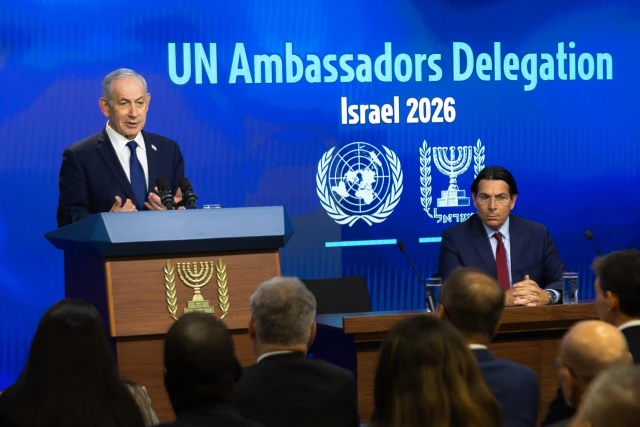
Israeli Prime Minister Benjamin Netanyahu told a delegation of UN ambassadors in Jerusalem that the Jewish state is "absolutely committed to protecting our future, and to ensuring a region of prosperity, security and peace, not just for us, but for all those who will join us," likely referring to a potential expansion of the American-brokered Abraham Accords in 2020.
The historically focused Netanyahu explained that "people thought that after the Holocaust, antisemitism would disappear. No, it was a break, a short respite. It returned."
"The only thing that changed is that when they come to massacre us, we have the ability to defend ourselves," Netanyahu stated.
He assessed the multiple serious security challenges that Israel has faced since the Hamas-led Oct. 7, 2023, attack.
"We've just emerged from a seven-front war...They would have slaughtered all of us if they could, but they couldn't, because we rolled them back. But not only them, the whole Iran axis, which keeps them alive. Hamas, Hezbollah, the Assad regime, Houthis, Iran itself, these various militias, we rolled them back," Netanyahu said. The Israeli UN Ambassador Danny Danon led the delegation of UN ambassadors in Jerusalem, which included envoys from Europe, Africa, Latin America and the Pacific. Addressing the UN ambassadors, Israeli President Isaac Herzog criticized the United Nations for failing to display “moral clarity” towards Israel and against global terrorism.
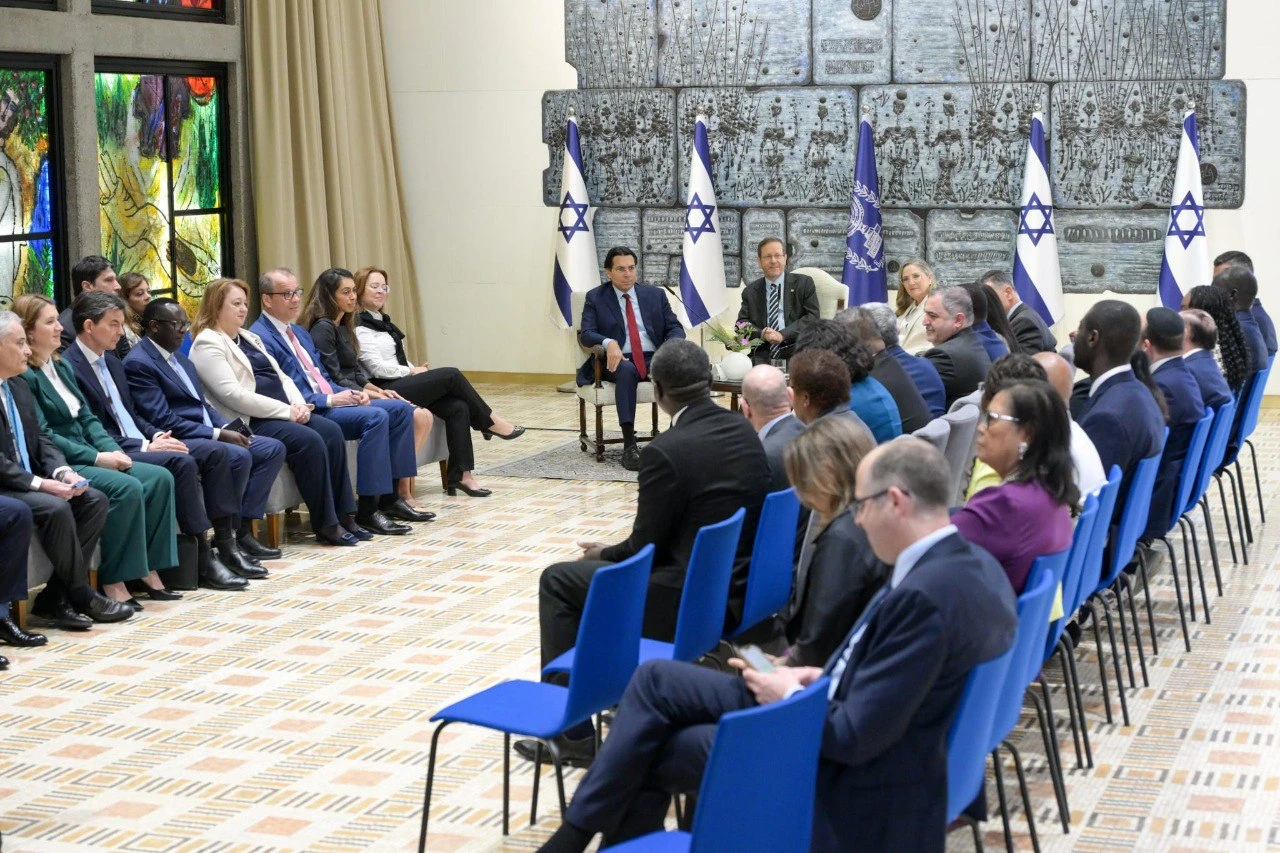
"The weakness of the international system is its lack of ability to fight terror without mercy, not accepting terror in any way, not justifying terror, and then blaming those who fight against terror, like us. In this respect, we see your visit as extremely important because the voice of your nations matters and is very influential and substantial as to the future of the international order and system," Herzog explained.
The Israeli president emphasized that international calls for the two-state solution must be placed within the post-Oct. 7 reality.
"We cannot go back to the old slogans of 'two-state solution' without understanding the pain, the trauma, and the new mechanisms that must be operational in order to bring peace with our Palestinian neighbors. I truly believe that the international community should adopt this model above all others. Why? Because for the first time, nations see for themselves and can judge and commit to a change on the ground in Gaza, and there is a plan that one can stick to," Herzog argued.
Despite the challenges, the Israeli president articulated support for the American-brokered ceasefire in Gaza and peace plans.
"It's quite amazing," and "There is progress all the time," stressing the need to find an alternative that could "replace the two-state solution."
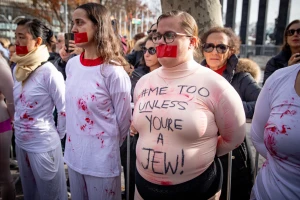
Israel’s First Lady, Michal Herzog, expressed concerns about the widespread international indifference towards Hamas’ systematic atrocities against Israeli women during the Oct. 7 attack and against former female hostages in Gaza.
“One of the things that has been very frustrating for me, for Israeli women, and Jewish women, is the denial by organizations, such as UN Women, of the use of sexual violence as a weapon of war. And it cannot be denied. The fact that some UN officials are still denying it is completely shocking and cannot be accepted," Mrs. Herzog said. The UN and human rights organizations were slow to condemn Hamas’ crimes against humanity.
President Herzog urged the UN in 2024 to recognize and condemn Hamas’ sexual violence against Israeli women. Israeli officials have also criticized the UN for attempts to create a false moral symmetry between Hamas and Israel.

The All Israel News Staff is a team of journalists in Israel.
You might also like to read this: