





Following temporary collapse, US-Iran talks are back on track after Arab leaders pressure White House to give diplomacy a chance
Rubio: Iran refuses discussion about limits on missile program, support for proxies, and treatment of protesters
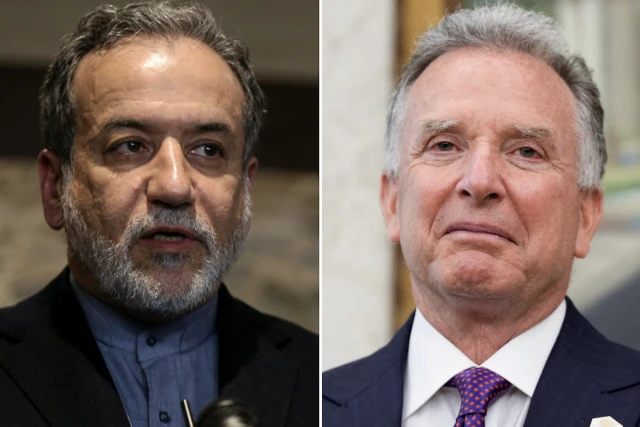
Negotiations between the Iranian regime and the U.S. are again expected to be held in Oman on Friday, after Arab leaders pressured the White House to walk back a decision to cancel the talks amid several new Iranian demands.
The U.S. was reportedly angered by demands to shift the talks from Turkey to Oman, and to hold them in a bilateral format focusing only on the nuclear issue.
“We told them it is this or nothing, and they said, ‘Ok, then nothing,’" a senior U.S. official told the news outlet Axios.
“We want to reach a real deal quickly, or people will look at other options,” the senior official had added, and other officials told Reuters that the collapse of the talks would push U.S. President Donald Trump toward considering military strikes again.
But several hours later, Axios reported that at least nine countries in the region had strongly urged the U.S. not to walk away from the diplomatic efforts.
“They asked us to keep the meeting and listen to what the Iranians have to say. We have told the Arabs that we will do the meeting if they insist. But we are very skeptical,” a U.S. official said, while another official added the Trump administration agreed to its allies’ request out of “respect” for them.
Iranian Foreign Minister Abbas Araghchi confirmed on 𝕏 that the talks were "scheduled to be held in [Oman's capital] Muscat on about 10 am Friday," thanking "our Omani brothers for making all necessary arrangements."
"Should the Supreme Leader in Iran be worried right now?"@POTUS: "I would say he should be very worried, yeah, he should be." pic.twitter.com/kMQTzx61V1
— Rapid Response 47 (@RapidResponse47) February 4, 2026
An NBC reporter asked Trump if Iranian Supreme Leader Ali Khamenei should be worried, amid initial reports of the talks’ collapse. “He should be very worried,” Trump said, before reaffirming he still has “the backs” of those protesting against the regime, citing his decision to strike the nuclear program last year. “That country is a mess right now because of us.”
Despite the apparent misgivings over Iran’s demands to hold the talks only with the U.S. and in Oman, reportedly in a symbolic effort to restart nuclear talks at the exact location where they were stopped last year, it remains unclear whether the U.S. will bring up its own demands for Iran to limit its missile program, its support for regional proxies and to change the treatment of protesters.
On Wednesday, a senior Iranian source cited by the Qatari newspaper Al-Araby Al-Jadeed had said, “We will not accept negotiations on any issue other than the nuclear program.”
The collapse of the talks had become more likely throughout Tuesday and Wednesday, as Iranian officials began demanding several changes to the agreed-upon summit in Turkey, where several foreign ministers from countries in the region were expected to attend.
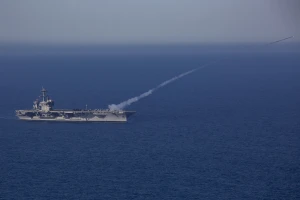
They pushed for a move to Oman, to which the U.S. reportedly agreed. However, two “very aggressive” Iranian actions toward U.S. vessels had further ramped up tensions.
Good answer. pic.twitter.com/QvjLYG0FfI
— Jason Brodsky (@JasonMBrodsky) February 4, 2026
Speaking on Wednesday, U.S. Secretary of State Marco Rubio had warned that the regime’s demands were risking the success of the talks. “I’m not sure you can reach a deal with these guys, but we’re going to try to find out,” he told reporters. “We don’t see there’s any harm in trying to figure out [if] there’s something that can be done.”
He also reiterated that the talks “will have to include certain things, and that includes the range of their ballistic missiles, that includes their sponsorship of terrorist organizations across the region, that includes a nuclear program, and that includes the treatment of [the] people."
After Rubio’s statements, Reuters quoted a senior Iranian official as saying that the U.S.’s insistence on broadening the scope of the talks was risky, and that limits on the missile program were “off the table.”
“The Islamic Republic would rather risk regime change by attack in Iran – having survived the 12-Day War – than regime change by agreement,” analyzed Jason Brodsky of the United Against Nuclear Iran think tank.
“This is why Khamenei refuses to discuss non-nuclear issues in the talks. He believes there is a better chance at regime survival even after an attack. It sounds crazy to Western ears but this is the calculation,” Brodsky wrote on 𝕏.
The Iranian demands apparently also angered the other states that were due to participate in the talks, even including Qatar, which has maintained warm relations with the regime. Several of these countries, including Saudi Arabia, Qatar, Turkey and others, had reportedly pushed the U.S. to find a diplomatic solution rather than risk provoking a regional escalation through military strikes.
However, Qatar’s foreign ministry spokesman Majed Al Ansari on Tuesday urged the return to negotiations covering all issues and without excluding any country.
“Qatar's current focus is on moving the region from a state of tension, mutual statements, and escalation to a new negotiation phase involving all regional partners, affirming the continuation of joint efforts without excluding any country, reflecting a collective international will to de-escalate the region,” he emphasized.
Commenting on this, Brodsky noted that “It takes a lot for Tehran to anger Qatar, and the Islamic Republic succeeded in doing so today.”
Israel’s Channel 12 reported in the evening that Israeli officials had forewarned White House envoy Steve Witkoff, who will lead the negotiations for the U.S., of Iran’s course of action during Tuesday’s meeting.
“Iran is stalling and, as usual, trying to deceive and mislead. They are not coming to the talks with clean hands. Limiting the ballistic missile project is not only in our interest, but in the interest of the entire region,” Channel 12 quoted senior officials as saying.
Witkoff reportedly answered, “We know very well what your red lines are. We are not going to an agreement at any price.”

The All Israel News Staff is a team of journalists in Israel.
You might also like to read this: