

Will US attacks on Venezuela impact terror organizations in the Middle East?
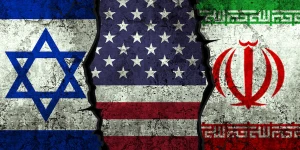
For Israelis, the American strikes in Caracas are seen as a potential blow to Hezbollah and the IRGC whose operations are partly financed through South American drug trafficking
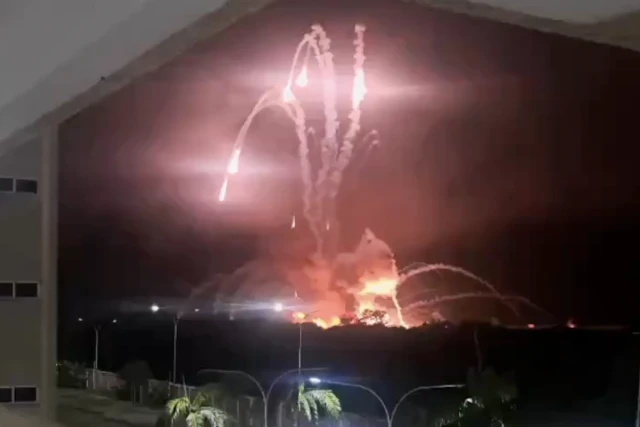
The dramatic U.S. attacks in Caracas over the weekend and the subsequent arrest of Venezuelan President Nicolás Maduro are likely to reverberate in the Middle East, impacting terror organizations that finance their activities through the South American drug trade.
The operation could disrupt a key financial and logistical hub used by Iranian-backed terror organizations operating in the Middle East.
For years, Venezuela has served as a nucleus linking South American drug cartels with the Islamic Revolutionary Guard Corps (IRGC) in Iran and the Iranian proxy Hezbollah, based in Lebanon. These groups have financed terrorist activity through narcotics trafficking, money laundering and weapons transfers in South America, all the while giving Iran a foothold in the Western Hemisphere.
Israel’s strategic interest
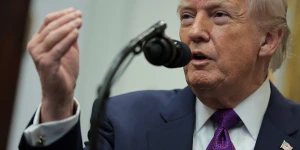
The U.S. action follows months of threats by U.S. President Donald Trump and comes shortly after a series of high-profile meetings between Trump and Israeli Prime Minister Benjamin Netanyahu. Jerusalem has long monitored developments in Venezuela.
“I want to express the entire government’s support for the determined decision and action of the United States to restore freedom and justice to that part of the world as well,” Netanyahu said on Sunday. “Across Latin America right now, we are seeing a transformation; several countries are returning to the American axis and, not surprisingly, to a connection with the State of Israel. We welcome this.”
Israeli officials have long warned that Middle East-based terror networks are increasingly embedding themselves in Latin America. In November, Israeli Foreign Minister Gideon Sa’ar described Venezuela as the epicenter of this trend.
“In South America, criminals are building narco-terror alliances with the Middle East terror states. The nexus of this network is Venezuela,” Sa’ar told Paraguay’s congress.
Venezuela as a narco-terror hub
While Venezuela’s role as a narco-terror stronghold predates Maduro, analysts say his rule transformed the country into a welcoming safe haven for terrorist organizations.
Benjamin Young, writing in the National Security Journal, described Venezuela under Maduro as a nucleus for “illicit drug trafficking and a sanctuary for terrorist organizations.”
“The Maduro regime has cultivated mutually beneficial relationships with armed groups such as the Lebanese Hezbollah and Colombia’s Marxist rebel group ELN, allowing them to exploit Venezuela’s lawless environment for their own nefarious ends,” Young wrote, calling for Venezuela to be designated a state sponsor of terrorism.
“As the world’s attention focuses on the Israel-Palestine conflict, one must not forget that the long arm of the Iranian state – with Venezuela as its Latin American spearhead – extends deep into the Western Hemisphere,” Young said.
During a 2022 visit to Israel with a delegation of Iranian expatriates, global terrorism expert Amir Hamidi explained how drug trafficking is underwriting terrorist activity.
“These groups can make a profit of $1 million from the sale of just 10 kilos of drugs – an amount that can be transported in a single suitcase,” Hamidi said.
A former head investigator for the DEA’s Project Cassandra, Hamidi estimated that Hezbollah has “laundered $200 million a month on behalf of drug cartels and other criminals.” The proceeds, he said, fund operations by Hezbollah, Hamas and the IRGC through a sophisticated system involving cocaine, heroin and weapons trafficking.
“Perhaps policymakers in Europe and the United States underestimated the reach of Iranian-backed criminal groups,” Hamidi noted.
Hezbollah and Iran’s operations in South America
Hezbollah’s presence in the region is several decades old. In 1992, the group bombed the Israeli embassy in Argentina, killing 29 people. Two years later, it carried out an attack on the AMIA Jewish community center in Buenos Aires, killing 85.
More recently, U.S. officials have warned that Venezuela has become a staging ground for the group’s expansion, especially in light of a one-year war with Israel that ended in November 2024. In October this year, former U.S. Assistant Secretary for Terrorist Financing Marshall Billingslea said the Maduro government created a “willing safe haven” for Hezbollah and Hamas operatives. Intelligence reports, he said, indicated that in 2025, some 400 Hezbollah commanders relocated to South America, primarily Venezuela.
“With the deterioration of Hezbollah’s infrastructure in Lebanon and mounting economic pressure on Iran, Latin America has become an increasingly vital source of financing,” Billingslea said.
The IRGC – designated a foreign terrorist organization by the U.S. State Department – has also entrenched itself in Venezuela. Under Maduro, Iran established production facilities for military drones on Venezuelan soil, and Caracas purchased Iranian armed drones.
This cooperation provides geographic proximity to the United States. The terror groups use the South American nation as a launching point for activities in the U.S. In July 2021, a U.S. court indicted four alleged Iranian operatives for attempting to kidnap U.S.-Iranian dissident Masih Alinejad, transport her via speedboat to Venezuela and from there to Iran.
And in 2020, a former Venezuelan National Assembly member and Maduro ally was charged in New York with cocaine trafficking coordinated with Hezbollah and Hamas and recruiting other activists.
An Israeli analyst speculated prior to the U.S. operation that removing Maduro would directly undermine Iran’s influence in Latin America.
“As long as Maduro is there, the Iranians will be there,” said Danny Citrinowicz, a senior fellow at Israel’s Institute for National Security Studies. “But if Maduro goes, Iran will lose the most important stronghold of its activity in Latin America.”
Citrinowicz described a previous U.S. strike as part of a broader strategy.
“By weakening Maduro, the U.S. weakens the Iranian presence in Latin America and weakens Iran’s ability to threaten U.S. soil,” he said. “The best way to weaken Venezuela is also to aim against the Iranian presence there.”
Want to help more people find our reporting from Israel? Leave a quick Google review of our website HERE .
Nicole Jansezian is a journalist, travel documentarian and cultural entrepreneur based in Jerusalem. She serves as the Communications Director at CBN Israel and is the former news editor and senior correspondent for ALL ISRAEL NEWS. On her YouTube channel she highlights fascinating tidbits from the Holy Land and gives a platform to the people behind the stories.
You might also like to read this: